
Emotional awareness regulation and communication
Emotional competences are broad and multifaceted, encompassing three key aspects: emotional awareness, emotion regulation, and communication of emotions. Emotional awareness is the ability to recognize and identify one’s own emotions and those of others, involving understanding personal feelings and associating them with specific experiences. Emotion regulation refers to managing emotions appropriately and productively, rather than reacting impulsively, teaching children to calm themselves, express frustration constructively, and deal with intense emotions like anger or sadness positively. Communication of emotions involves expressing feelings clearly and respectfully, verbally and non-verbally, enabling children to share what they feel, avoid misunderstandings, and build deeper connections with others. Together, these components form the basis for emotional competence, supporting personal and interpersonal growth.
-
The emotional wolf
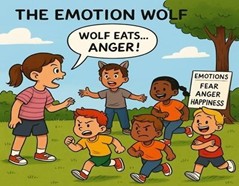
Inspired by the traditional Italian game Lupo Mangia Frutta (literally “Wolf Eats Fruit”), this emotional variation helps children recognise, express, and regulate emotions while engaging in a fun and active game of tag. Instead of naming fruits, children take on different emotions, which they must express and defend before being caught by the “wolf.”
-
The Witch Commands an Emotion
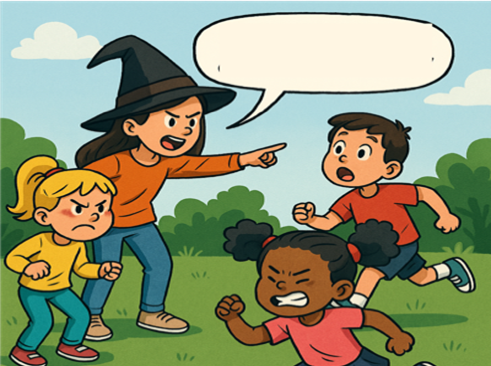
This game is a variation of the classic Italian children’s game Strega Comanda Colore, where instead of finding a specific colour, children must express or act out emotions to avoid being caught by the “witch” (the chaser). It helps children develop emotional awareness in a playful and engaging way.
-
Emotional Hopscotch
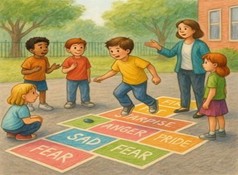
In this adapted version of hopscotch, the traditional numbered squares are replaced with emotions such as “joy,” “anger,” “fear,” or “curiosity.” Skill focus Primary Skill Focus Complementary/Secondary Skill Focus Age group Student number Duration 6-10 years old 2 to 10 children (pairs or small groups) 20-30 minutes