
Problem-solving
The problem-solving process involves finding a solution to a problem by following several steps in a systematic way (= procedures or strategies). This is a structured approach to identify a problem, analyse it, and find and implement an effective solution. This skill typically transcends single disciplines and can be applied in different contexts. This skill involves critical thinking, creativity, and the ability to work through obstacles systematically. Problem-solving also requires adaptability, as not all solutions may work as expected, leading to adjustments and further exploration of alternatives.
-
Design thinking
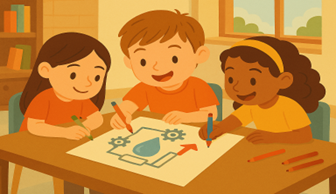
Design Thinking is a way of thinking and working that involves coming up with creative solutions to problems ranging from subject-specific, cross-curricular to real live problems that the children may encounter in their own daily lives. Here we will solve problems by looking closely, if needed, empathizing, and thinking cleverly. It can be done both indoors and outdoors. Both surroundings have specific and different real-life problems for students. This learning activity stimulates problem-solving thinking by actively involving children in recognising and tackling real problems.
-
Scientific concepts in motion
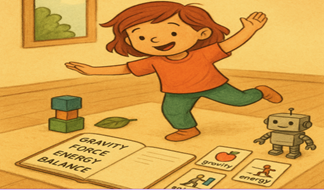
Turning scientific concepts into movement involves children experiencing abstract principles (such as states of matter) through movement. Children depict these concepts physically with their bodies, exploring how a concept works, how to represent it, and how to improve it. It can be done indoors or outdoors. This learning activity focuses on problem-solving by students are given a scientific concept, such as states of matter, and the challenge is to represent it through movement.
-
Six thinking hats
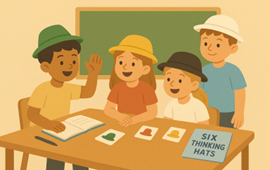
De Bono’s thinking hats (Edward de Bono’s Six Thinking Hats) are a thinking technique that helps to look at a problem, idea or situation in different ways. Each “hat” represents a particular way of thinking. This makes it easier for children (and adults) to organise their thoughts and reflect together without confusion or discussion. This method is very good to use in the design process or Design Thinking, especially in reflection and collaboration. It can be used both indoors and outdoors. Both surroundings have specific and different activities and real-live problems for students.
-
What next

“What next” is an adaptable learning activity that develops problem-solving and critical thinking skills of the students. During an investigation or design task, pupils encounter an unexpected problem that blocks their progress. Working individually or in small groups, students must brainstorm possible solutions, weigh the pros and cons, and gather the necessary materials to overcome the obstacle. This activity teaches children to analyze situations, make reasoned decisions, and reflect on their outcomes.
-
Who am I?

“Who Am I?” is an activity where each player wears a card on their forehead with the name of a famous person, animal, or fictional character, without knowing who they are. By asking only yes/no questions, each player tries to figure out their identity. The activity can be conducted both inside the classroom and in outdoor settings, depending on the investigation or design task. The learning game ‘ Who Am I?’ encourages problem-solving because players must actively develop strategies to discover their identity.