
Definition of the skill
Empathy is the ability to understand and share the emotions and viewpoints of others, putting oneself in their shoes both emotionally and cognitively. This skill is at the heart of interpersonal relationships and lays the foundation for creating a more harmonious and cooperative society. Empathy has two key dimensions:
Emotional empathy, which refers to the capacity to feel what others feel and respond with appropriate emotions.
Cognitive empathy, which involves understanding another person’s perspective or mental state without necessarily sharing their emotions.
Both aspects are essential for children as they navigate complex social interactions in their personal and academic lives.
Complexity of the skill
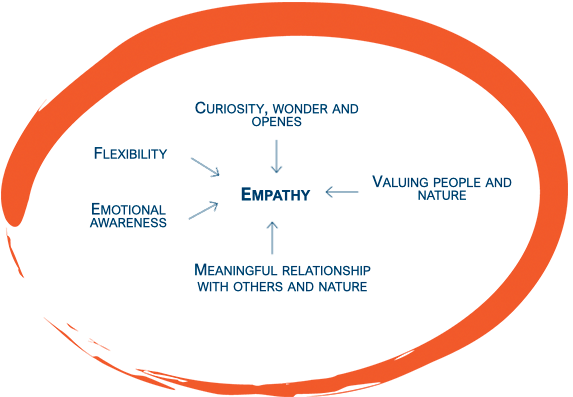
Emotional awareness: The basis of empathy is that children are able to recognize and name their own feelings and those of others. This creates the foundation for them to respond appropriately to the feelings of others.
Meaningful relationship building empathy requires quality social relationships because it helps children form deeper bonds, making them aware that they themselves are part of a community and enabling them to listen to and understand each other.
Valuing people and nature: for children to have empathy for others, they need to learn to respect and appreciate differences between people, whether their feelings, thoughts or cultures. This attitude can also extend to nature. Children will wonder at the diversity of the living world, and in doing so they will develop a more responsible, caring relationship.
Curiosity, wonder and openness: true empathy can only develop if children are open and curious about the stories, perspectives and feelings of others. Inquiry promotes attentive listening and understanding.
Flexibility: being empathetic also means that children are able to put aside their own perspective and see the situation from the other’s point of view. This requires emotional flexibility.