
Definition of the skill
Connectedness is the ability to recognize and engage with the broader community, both locally and globally. It goes beyond sociability and collegiality, embracing a sense of shared humanity and responsibility. This interconnectedness is shaped by relationships through communication, travel, migration, trade, and political systems. On a cognitive level, connectedness involves understanding global, regional, national, and local issues, while recognizing the interdependence of different countries and populations. Socio-emotionally, it involves empathy, solidarity, and respect for diversity. Behaviorally, it means taking actions that promote peace, sustainability, and social cohesion, fostering environments where people care for one another.
Complexity of the skill
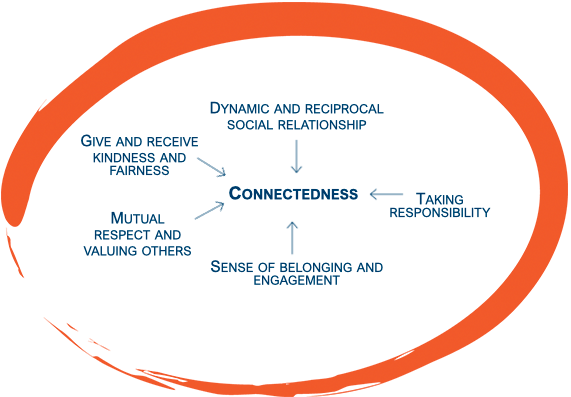
Awareness and Curiosity: Children begin to notice differences in people, cultures, and the environment. They grasp concepts of fairness, kindness, and responsibility toward others and nature.
Mutual respect and valuing others: Through activities like role-playing and group work, children learn to respect and valuing others’ feelings, backgrounds, the nature and the environment. This respect often shows in actions like sharing and helping.
Sence of belonging and engagement: Want to feel linked with others, a group of people(peers, family, community, school), linked and being a part (and responsible and act) of something larger than oneself.
Dynamic and reciprocal relationship: It is very important for children to love and feel loved. We teach them that they are important and that they should consider others important too. This is characterized by understanding and sensitivity to the feelings and beliefs of others, and vice versa, the same for themselves.
Taking Responsibility: Children practice responsibility in small ways, such as recycling or caring for pets or plants. These actions nurture a sense of duty toward their community and the environment.