
Definition of the skill
Resilience is the ability to adapt to challenges through mental, emotional, and behavioural flexibility. It is not just a personal trait but arises from the interaction between individuals and their environment, like family, community, and society. Resilience is the process and outcome of successfully adapting to difficult or challenging life experiences, especially through mental, emotional, and behavioural flexibility and adjustment to external and internal demands. A number of factors contribute to how well people adapt to adversities, including the ways in which individuals view and engage with the world, the availability and quality of social resources, and specific coping strategies.
Complexity of the skill
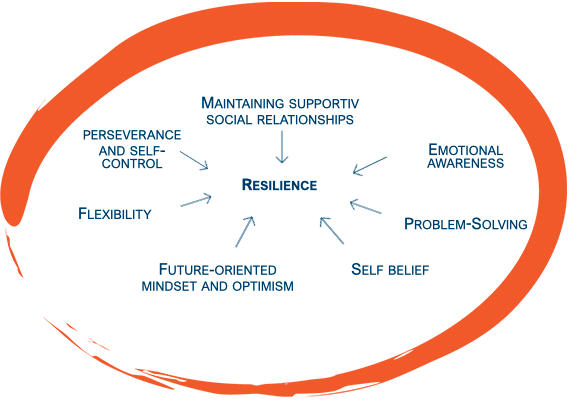
emotional regulation and acceptance: children can calm themselves after experiencing frustration or failure (e.g., losing a game or resolving a conflict).
self-control: in order to overcome failure and emotional pitfalls, the children must be able to establish a vision for the future (future-orientated mindset), control their thoughts and actions in order to achieve their goals, and be able to block out factors that might disturb them from reaching their goals. This requires a high degree of goal-orientation.
problem-solving: they look for ways to overcome obstacles, like completing homework independently.
maintaining relationships: they build and nurture supportive friendships or family bonds to help them through tough situations.
future-oriented mindset and optimistic outlook: they remain hopeful for a positive outcome even when facing difficulties.
flexibility: they adapt quickly to changes, such as a new teacher or classmates.