
Definition of the skill
Critical thinking is the ability to reason objectively and logically, analyse and evaluate information, consider different perspectives and draw conclusions based on evidence and logic. It enables us to evaluate and assess information in an objective and systematic way.
Complexity of the skill
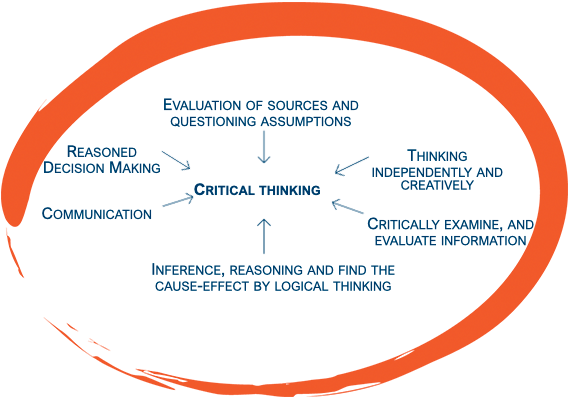
Critically examine, analyse and evaluate information – children learn to examine new information and ideas, analyze them without pre-judgement, and form conclusions rather than just remembering facts.
Thinking independently and creatively about complex problems and issues, challenge assumptions, fostering independent thought. .
Evaluation of sources and questioning assumptions: Assessing the credibility of sources and the strength of arguments. Recognizing the motives and interests of the information provider, and considering the different perspectives of others. It relies heavily on empathy
Inference, reasoning and find the cause-effect by logical thinking– Drawing logical conclusions based on evidence and reasoning.
Critical thinking needs ability to form well-reasoned opinions and positions and ensures that we do not simply believe everything we hear, see, feel or read.
Communiction: Sharing and recieving the information with others. Open for understanding others view. Clearly communicating the critikal thinker’s thoughts and conclusions in a logical manner.
Self-Regulation and being objective: Acknowledging your own biases and assumptions and actively working to overcome them.
Making independent decisions: By remaining impartial and motivated by facts rather than assumptions.