
Definition of the skill
Valuing People and Nature is the skill of recognising the intrinsic worth of both human beings and the natural environment. This involves understanding the interconnectedness between human well-being and the health of the planet. It includes a conceptual and procedural grasp of sustainable development as essential for a thriving future. This skill promotes respect for ecosystems, responsible resource use, and a balanced relationship between people and nature, which are crucial for long-term sustainability and societal well-being. Beyond awareness, valuing people and nature requires taking responsibility and transforming values into concrete actions that nurture and protect both humanity and the planet, ensuring a sustainable legacy for future generations.
Complexity of the skill
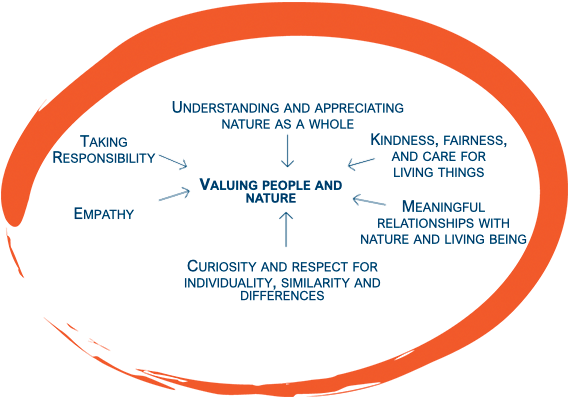
Understanding and appreciating nature as a whole: The feeling that all living beings belong together and that humans are part of nature and they form a a wholeness.
Empathy: This is a critical element of children’s relationship with nature and other people, which can be developed through interactions with the natural world and other people.
Meaningful relationships with nature and living being: Cultivating a healthy relationship with the natural environment, the community and individual to awaken in children a feeling of connectedness.
Curriosity and respect for Individuality, similarity and differences: Children are naturally curious. This natural curiosity and respect can easily be extended to the needs and rights of other Living Beings and Nature through interactions with the natural world and other people. This respect is often expressed in actions such as sharing and helping.
Kindness, fairness, and care for living things: Showing compassion and consideration for others, and a willingness to act individualy or/and in collaborating in teams for the benefit of others (including nature).
Taking Responsibility: Children practice responsibility in small ways, such as recycling or caring for pets or plants. These actions nurture a sense of duty toward their community and the environment.