
Valuing people and nature
Valuing People and Nature is the skill of recognising the intrinsic worth of both human beings and the natural environment. This involves understanding the interconnectedness between human well-being and the health of the planet. It includes a conceptual and procedural grasp of sustainable development as essential for a thriving future. This skill promotes respect for ecosystems, responsible resource use, and a balanced relationship between people and nature, which are crucial for long-term sustainability and societal well-being. Beyond awareness, valuing people and nature requires taking responsibility and transforming values into concrete actions that nurture and protect both humanity and the planet, ensuring a sustainable legacy for future generations.
-
Pigs in Mud – Nature Edition: “Happy in the Mud”
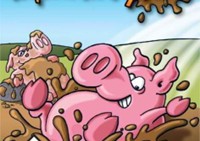
Pigs in Mud/Dirty Pig, originally Drecksau, is a fast, interactive card game where each player is a farmer taking care of their piglets. Players try to be the first to get all their piglets “happy in the mud.” In this adapted version, we keep the original rules but shift the meaning: Students still play competitively, but they also track a shared “ecosystem impact” (Nature Meter) and use quick, in-the-moment narration cues that connect game choices to caring for living beings and shared resources. Skill focus Primary Skill Focus Complementary/Secondary Skill Focus Age group Student number Duration 6-10 years old 2-4…
-
Beavers and Mice – “Biodiversity and Coexistence” Edition
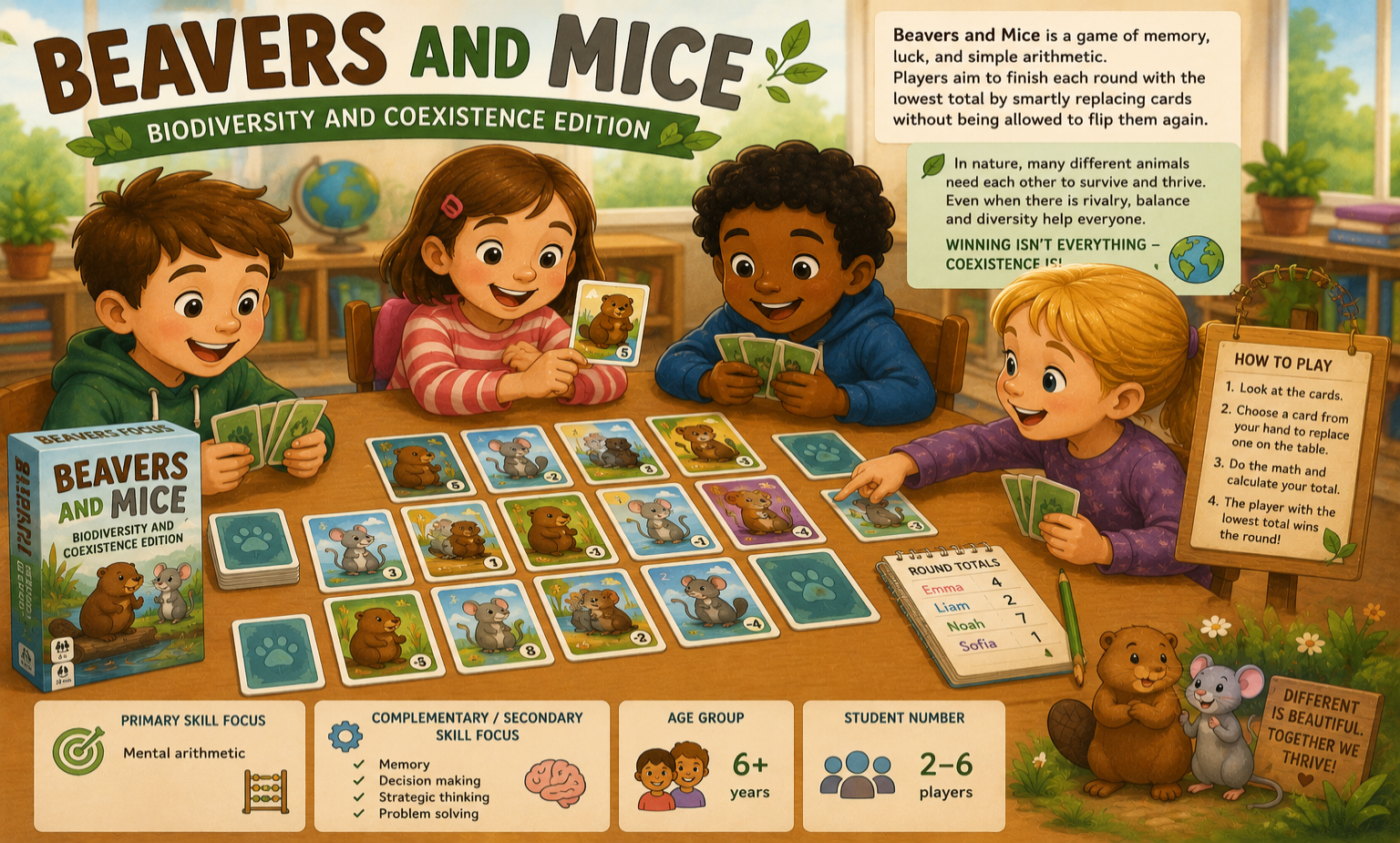
This is an adapted version of Beavers and Mice, a game of memory, luck, and simple arithmetic. Players still aim to finish each round with the lowest total by smartly replacing cards without being allowed to flip them again. In this version, the animals are not just decoration. The beavers, mice, and cards that show both kinds of animals, represent biodiversity and interdependence: even when there is rivalry, living beings often need each other to survive and thrive. The game stays competitive, but students learn that winning and thriving are not the same thing – nature thrives through balance and…
-
Treasure hunt
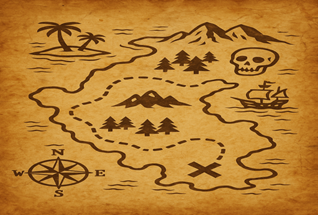
This is a team-based treasure hunt where children follow riddles, maps, and nature-linked observation tasks to find a series of hidden clue stations. At each station, teams solve a prompt connected to valuing nature and valuing people, then earn a puzzle piece. When all pieces are collected, teams assemble them into an A4 “final message” that reveals the location of the final treasure (a nature-connected reward). Skill focus Primary Skill Focus Complementary/Secondary Skill Focus Age group Student number Duration 6-10 years old 2-30 children (best is teams) 30-50 minutes (depending on number of stations)