
Connectedness
Connectedness is the ability to recognize and engage with the broader community, both locally and globally. It goes beyond sociability and collegiality, embracing a sense of shared humanity and responsibility. This interconnectedness is shaped by relationships through communication, travel, migration, trade, and political systems. On a cognitive level, connectedness involves understanding global, regional, national, and local issues, while recognizing the interdependence of different countries and populations. Socio-emotionally, it involves empathy, solidarity, and respect for diversity. Behaviorally, it means taking actions that promote peace, sustainability, and social cohesion, fostering environments where people care for one another.
-
Colour Jenga: Buddy Tower
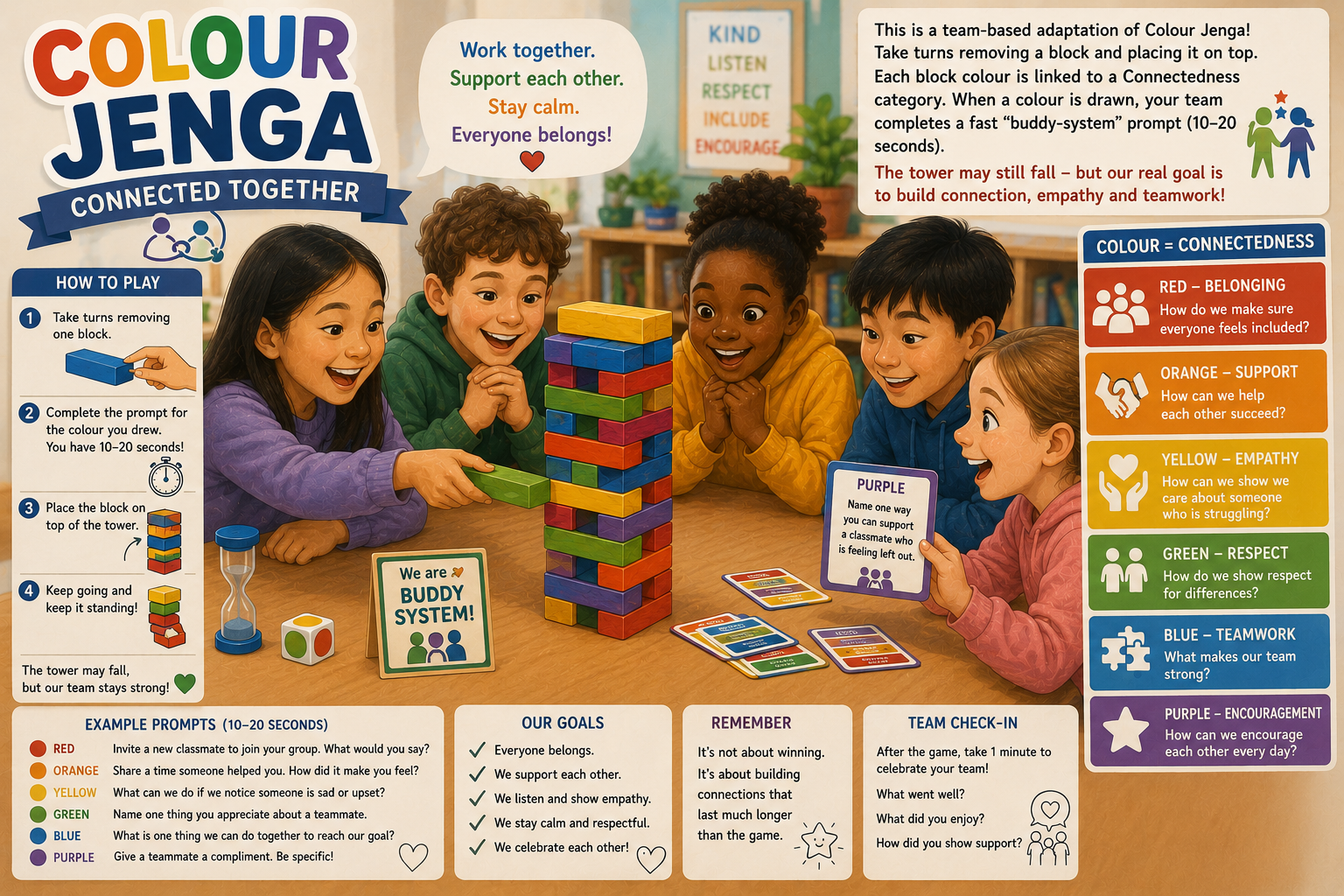
This is a team-based adaptation of Colour Jenga where students take turns removing a block from a Jenga tower and placing it on top without collapsing it. Each block colour is linked to a Connectedness category, so when a colour is drawn, the team completes a fast “buddy-system” prompt (10–20 seconds). The tower may still fall – but the real goal is to practice belonging, support, empathy, and teamwork while staying calm and respectful under pressure. Skill focus Primary Skill Focus Complementary/Secondary Skill Focus Age group Student number Duration 6–10 years old 2–24 children (in groups) 25–40 minutes
-
Falling Night in Palermo (Buddy Village Edition – Lambs, Wolves and Shepherd)
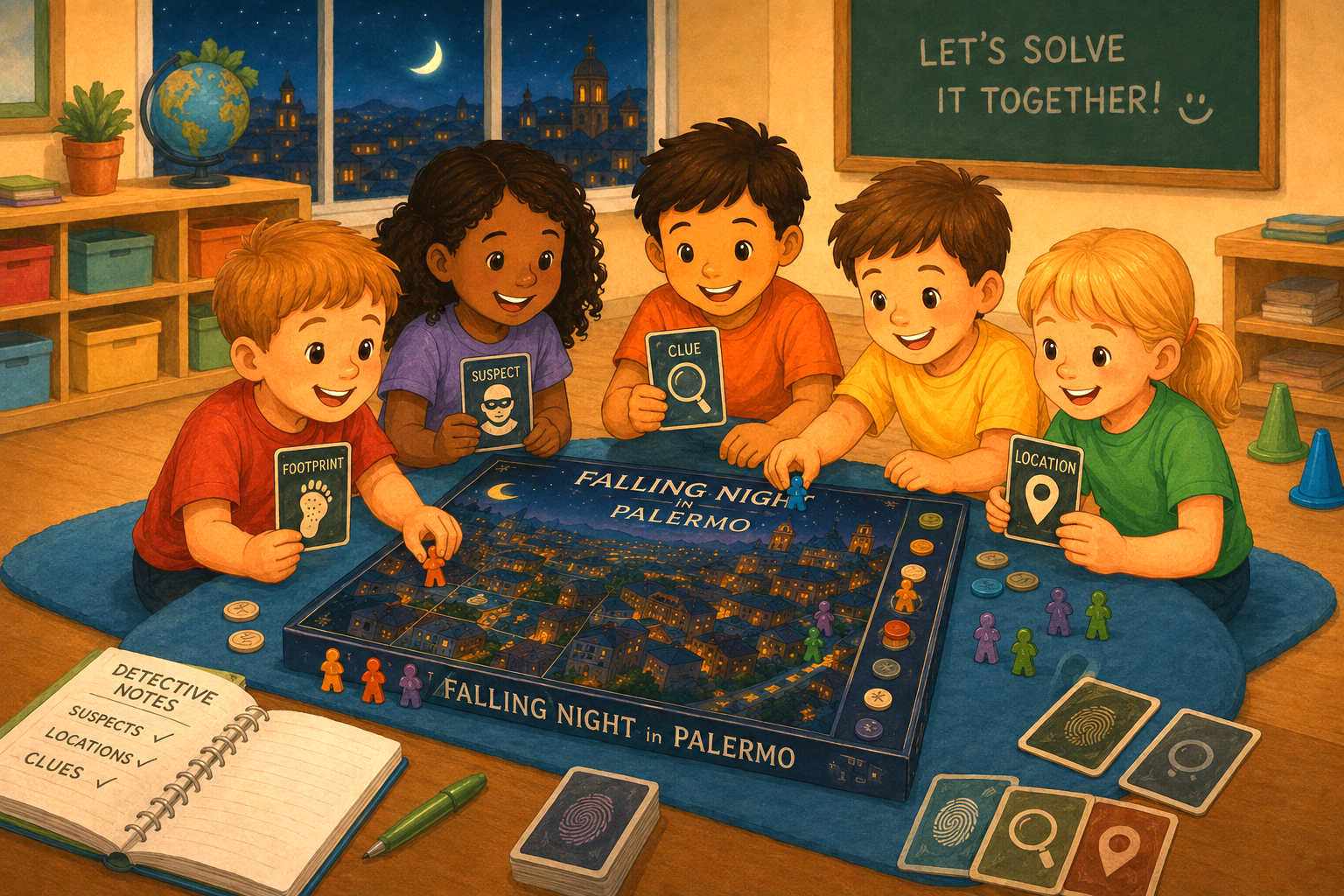
This is a child-friendly social deduction game based on the Greek traditional “Πέφτει η νύχτα στο Παλέρμο.” It’s a cooperative card-based game and like cooperative games in general players work together to achieve a common goal rather than competing against each other, emphasizing teamwork, communication, and collective success or failure. In this specific game players form a village community. Most players are Lambs (community members). Two players are Wolves (a Hidden Wolf and a Visible Wolf). One player is the Shepherd, who secretly learns who the Visible Wolf is and tries to help the lambs. The game alternates between Day…
-
Traditional Relay Games – Buddy Challenges
This is a team relay game where students complete short movement challenges (run, balance, dribble, carry) and then tag the next teammate. The adaptation turns a normal relay into a buddy system relay: every relay leg includes a 10-second connectedness action (encouragement, appreciation, inclusion, responsibility). Teams still race, but the real aim is to practice being a supportive community under pressure. Skill focus Primary Skill Focus Complementary/Secondary Skill Focus Age group Student number Duration 6-10 years old Whole class (in groups). 25–40 minutes (1–3 rounds)