
Critical thinking
Critical thinking is the ability to reason objectively and logically, analyse and evaluate information, consider different perspectives and draw conclusions based on evidence and logic. It enables us to evaluate and assess information in an objective and systematic way.
-
Dilemma thinking
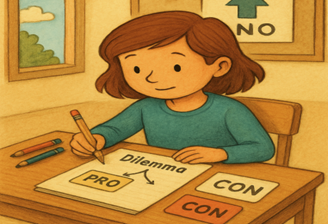
“Dilemma thinking” activity develops critical thinking and empathy in students aged 6 to 10. During the exercise, pupils work in pairs or small groups to analyze a realistic and meaningful dilemma, such as weighing the pros and cons of living near a volcano. Students make deliberate choices, articulate their reasoning, and justify decisions with evidence. This collaborative exercise encourages children to evaluate multiple perspectives and respect diverse viewpoints during class discussions.
-
Open ended enquiry
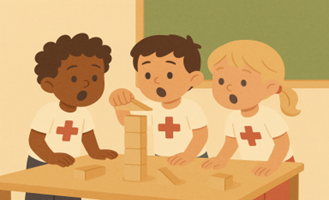
Open ended enquiry means that students formulate their own research question and discover in their own way how to answer it. The teacher guides them in this process but deliberately leaves room for their own input and creativity, with an emphasis on curiosity, self-discovery and critical thinking. Rather than giving answers, the teacher stimulates the thinking process by asking focused questions and creating a stimulating learning environment. This can be done with concrete material as well as with theoretical concepts.
-
Smart Match
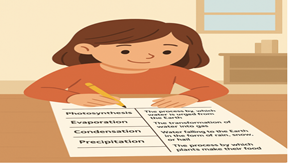
“Smart Match” builds critical thinking and problem-solving skills in students aged 6 to 10. Following a theory lesson, pupils receive a worksheet to pair mixed-up vocabulary terms and their definitions correctly. To enhance critical evaluation, teachers can include one extra term without a matching description, forcing students to eliminate options. By comparing descriptions, making reasoned decisions, and explaining their choices to peers, students strengthen their analytical and logical skills.
-
True or False? You’re not fooling me!
The teacher starts with a thought-provoking question on any topic, followed by a fictional answer, and then the real scientific explanation. Students brainstorm possible answers, discuss their reasoning, and evaluate which explanation is more convincing. Through reflection, they learn to recognise the difference between plausible-sounding ideas and factual knowledge. For example, the topic could be animal features (Why are flamingos pink?), but the same approach can be applied to many other subjects.
-
Categorise
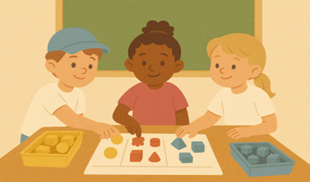
Categorising means that children group things based on similarities or differences, such as colour, shape, function, or theme. For young learners, this is a playful and active way to learn to think logically and critically. For example: This activity helps children make connections, develop language and create an overview. It can be done individually, in pairs or in groups, using materials such as cards, pictures or real objects.