
Creativity
Creativity is the capacity to reinterpret, combine, or expand upon existing conventions to generate ideas or approaches that are both novel and valuable. It involves combining existing knowledge, experiences, and perspectives in innovative ways to solve problems, create art, design products, or develop solutions. Creativity is often the result of collaboration, feedback, and iteration.
-
Anticipatory reading
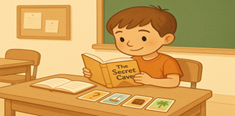
The anticipatory reading is an interactive teaching strategy that begins with pair work or developing the story in small groups and finally presenting it to the whole class. It encourages imaginative processes, collaboration, active participation, curiosity, sense of wonder and openness towards stories of their own and those developed by other groups. The anticipatory reading activity places creativity at its core: students are challenged to integrate given keywords into original narratives, invent twists, and imagine alternative outcomes. This nurtures their ability to generate ideas and express them in unique ways.
-
Flyswatter
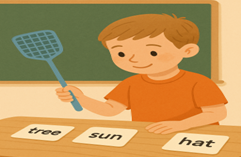
The Flyswatter is an energetic and playful learning activity in which students work in teams to identify the correct card representing words, numbers, pictures, or concepts by “swatting” it first. While the original version is fast and competitive, this version is a creativity-focused learning activity, where students generate alternative solutions, invent strategies, and creatively connect clues to cards. Instead of only reacting quickly, students explore multiple possible answers, find unique links between concepts, and express original ideas while collaborating with teammates.
-
I have, who has?
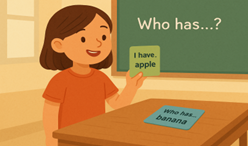
This learning activity expands the traditional “I have, who has?” format into a creative reasoning and association-building task. Instead of simply matching cards in a sequence, students explore multiple possible connections, invent new links between concepts, and create their own cards and chains. The activity can be implemented both indoors and outdoors. A flexible classroom layout is recommended, allowing students to move freely, collaborate in pairs or small groups, and arrange materials in a way that supports exploration and creativity. The activity emphasises flexible thinking, curiosity, originality, and connecting ideas, while strengthening communication and collaboration.
-
Onion Rings
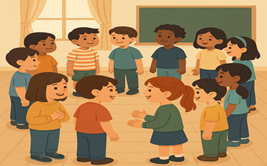
The Onion Rings learning activity is a structured, movement-based creativity exercise in which students stand in two concentric circles (“rings”) facing a partner. When the teacher gives a prompt, the pairs respond together by co-creating ideas, solutions, comparisons, or imaginative scenarios. After each prompt, one ring rotates, creating new partners and new creative combinations. This activity transforms a simple movement structure into a rich creative thinking process, where students explore multiple perspectives, generate ideas quickly, adapt to new partners, and express their imagination in flexible and collaborative ways.
-
Wonderful Inventions
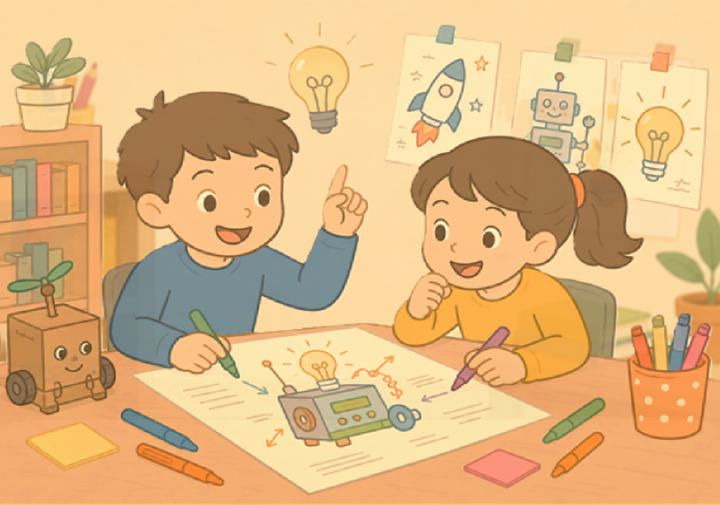
Wonderful Inventions is a creativity-centered learning activity in which students design imaginative inventions that solve real or fictional problems. Students begin by identifying everyday challenges (in school, at home, in nature), then generate bold, playful, or futuristic solutions. The focus is on: divergent thinking; flexible idea generation; building on partners’ suggestions; expressing creative reasoning; curiosity-driven exploration. The goal is not a polished invention, but a creative problem-solving process.