
Grade 1. students
-
Coding in nature: Program a human robot
This 90-minute STEAM project introduces 1st graders to the basics of coding through a movement-based activity in a natural setting. The lesson is structured into 2 clear stages, starting with an outdoor session where students act as “programmers” and “robots.” By giving step-by-step verbal commands to guide their partners around stones and branches, students learn to “debug” their instructions in real-time when the “robot” take a wrong turn. The second stage takes place in the classroom, where students translate their physical experience into visual “route maps” using symbols and arrows. It is an interdisciplinary approach that connects math, physical activities…
-
Emotions in Nature
Imagine turning a simple walk in the park into a magical “emotion hunt” where 1st graders discover feelings. This 2-hour outdoor STEAM project helps 1st-grade students connect their inner feelings with the natural world around them. Through 6 exciting stages, children go from learning about basic emotions to exploring the wild to find “sad” broken sticks or “joyful” bright petals. Working in pairs, children go on an “emotion hunt” to collect or draw natural objects like leaves and stones that represent feelings like joy or anger. Students use these materials to create “emotion maps” and “nature faces,” blending science observation…
-
Recycled Paper Making: “Kind Words for Mothers and Mother Earth
Through mixed-age collaboration, this two hours STEAM program aims to develop empathy and connectednessof the 1st greade students by collaborating with 2nd or 3rd grades during the intricate paper-making process. Papermaking with kids is a fun and creative activity that can be done with common household items! Making paper teaches children how one of our most commonly used materials — PAPER — is made, and it’s also a fun sensory project for kids of all ages. This STEAM project sharpens emotional awareness as children use choose feeling words, and draft a gratitude message that is kind, specific, and respectful. By…
-
Create a lunar landscape
This 100-minute STEAM program helps 1st-grade students understand gravity and how Moon craters are formed. Kids start by jumping and feeling how gravity pulls them down, then they listen to a story about the Moon. Using a sandbox and different stones, they experiment to see how the weight and size of an object change the crater it makes. They learn cool facts, like how heavy and light objects actually fall at the same speed, which often surprises them. Finally, the students use what they learned to design their own lunar landscape and explain their “scientific” results. SPIRIT Skill Focus Basic…
-
Activating the senses – Activity in a nearby meadow or park
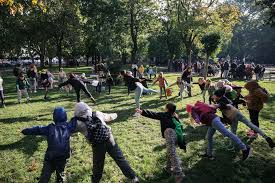
Children often spend their daily lives in artificial environments—frequently in urban settings—surrounded by limited material and natural stimuli. For them, it is especially important to connect with nature through direct, personal experiences. Even for those who live closer to nature, it is valuable to reflect on and organize their spontaneous experiences for deeper understanding. The conscious use of the senses is the foundation of learning. Observation, measurement, and experimentation all build on this. At this age, children typically view the world from an egocentric perspective, but such activities help them realize that others may see the same thing differently. Direct…