
Definition of the skill
The problem-solving process involves finding a solution to a problem by following several steps in a systematic way (= procedures or strategies). This is a structured approach to identify a problem, analyse it, and find and implement an effective solution. This skill typically transcends single disciplines and can be applied in different contexts. This skill involves critical thinking, creativity, and the ability to work through obstacles systematically. Problem-solving also requires adaptability, as not all solutions may work as expected, leading to adjustments and further exploration of alternatives.
Complexity of the skill
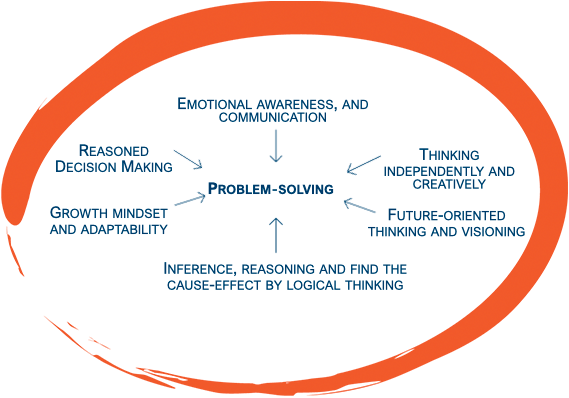
Emotional awareness, and communication – children are motivated to solve a problem if they can recognise and verbalise why the situation is not good for them. (makes feel bad). Recognising and explaining it is an essential starting point for identifying, and solving the problem.
Future-oriented thinking and visioning: children need to be able to imagine and articulate what a solved situation means to them. Describe the situation when the problem is really resolved. This requires “visioning” critical thinking.
Inferring, reasoning and finding the cause-effect: adults break down the problem, find the cause-effect relationship and identify the areas they want to change in the problem-solving process. Children need help to do it. Working together to break the problem into smaller, more manageable chunks, and finding logical connections together. However, it is important that children have the ability to understand these cause-effect relationships well. Facilitate the processes with open-ended questions.
Thinking independently and creatively: Devise many possible solutions to all subproblems (divergent phase which involves CREATIVITY). Support children to do it. At this point, they don’t even have to have “good” solutions.
Reasoned Decision Making: Evaluating the possible solutions and deciding which one might be most effective and solve all subproblems (convergent phase which involves CRITICAL THINKING). It includes assessing the options (pros and cons of each possible solution), weighting consequences(which solution offers the most benefits) and finally making a reasoned choice.
Growth mindset and adaptability: Trying out a chosen solution and learning from the results, even if it doesn’t work immediately. Seek adjustments and further alternatives means that CRITICAL THINKING comes into play again in this phase.