
Definition of the Skill
Developing emotional competence is a cornerstone of promoting the well-being of children and adults. Emotional competences are broad and multifaceted, encompassing three key aspects: emotional awareness, emotion regulation, and communication of emotions. Emotional awareness is the ability to recognize and identify one’s own emotions and those of others, involving understanding personal feelings and associating them with specific experiences. Emotion regulation refers to managing emotions appropriately and productively, rather than reacting impulsively, teaching children to calm themselves, express frustration constructively, and deal with intense emotions like anger or sadness positively. Communication of emotions involves expressing feelings clearly and respectfully, verbally and non-verbally, enabling children to share what they feel, avoid misunderstandings, and build deeper connections with others. Together, these components form the basis for emotional competence, supporting personal and interpersonal growth.
Complexity of the skill
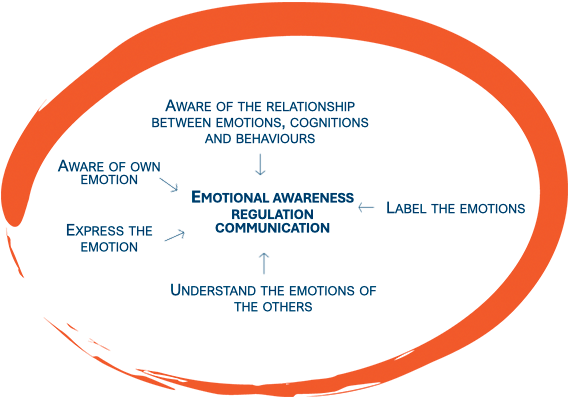
Be aware of own emotions. It is the ability to perceive and identify own feelings and emotions quite accurately.
Label the emotions. It is the ability to use the appropriate emotional vocabulary for the feelings and emotions experienced, labeling them correctly.
Express the emotion appropriately to yourself and others. It is the translation of your inner world into a language others can understand, spoken not just with words, but with your body and your actions.
Understand the emotions of the others. It is the ability to accurately perceive the emotions and feelings of the others, as well as relate from empathy by putting into practice the appropriate verbal and extraverbal language for the situation.
Become aware of the relationship between emotions, cognitions and behavior. It is the ability to understand how emotional states influence thinking and behavior, as well as understand the influence of our ideas and behaviors on emotional states.