-
Pilot implementation (detailed example with lesson/activity plan), attachments – Escape room activity based on the story of The Stork and the Fox
Escape Room Activity Based on the Story of The Stork and the Fox
(The story can be found online in many languages and versions. For example, in English: https://www.youtube.com/watch?v=7n538d6rHhE )
The activity takes place on school grounds. Since the children are in a familiar environment, it is enough to name the locations, but this can also be supported with a simple map. Helpers can be invited from upper grades. Each team starts at a different station. At the end, the codes must be entered in the correct order as indicated on the code sheet.
Children should have a pencil case with pencils and pens ready!
Schedule:
Group formation and motivation: 15 minutes
Task solving: 85 minutes
Closure: 20 minutes
Team Formation: with colours (red, yellow, blue, green, white)
A) Random: The code sheets are placed in sealed envelopes. Each student draws one, and the colour of the code sheet determines their team. In this case, the composition of the teams cannot be influenced, which may present challenges during collaborative work.
B) Guided: The code sheets are distributed by the teacher according to the students’ names
Stations:
- Eat like the stork!
Subject Integration: Environmental Studies, Mathematics
Materials: Half-liter plastic bottles with wider mouths, Chinese chopsticks tied together at the end with a rubber band, 5–10 cm long pieces of yarn. It is recommended that each pair receives one set.
Task: The stork is a wading bird. With its long beak, it cleverly picks up small animals: insects, beetles, toads, mice, voles, lizards, snakes. In the story, it eats lunch from a bottle. Can you also get the “delicacies” out of the bottle?
Code: Count how many pieces of yarn are in the bottle!
Solution: 9
- Find the fox’s lunch!
Subject Integration: Mathematics, Environmental Studies
Materials: A balance scale or coat hanger with clothespins at the ends; several paper bags of different weights, each labelled with a different number
Task: The fox is a predator. Its diet mainly consists of small rodents, but it also eats insects, worms, fish, and lots of fruit in the autumn. The fox’s lunch in the story is in the heaviest bag. Can you find it?
Code: The number written on the heaviest bag
Solution: 1
- What time is the party?
Subject Integration: Mathematics, Visual Arts, Reading
Materials: A worksheet cut into as many pieces as there are team members, coloured pencils
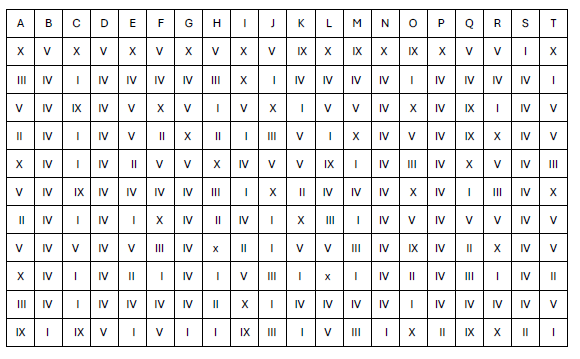
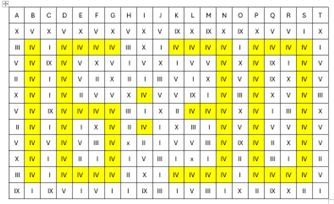
Task: Do you know Roman numerals? Find all the Roman numeral IVs and colour in the correct squares! If you arrange the columns in alphabetical order, you’ll find out what time the party starts.
Code: The digit in the tens place of the digital clock’s minute display
Solution: 3
- Send the Invitation by Airplane!
Subject Integration: Design and Technology, Mathematics
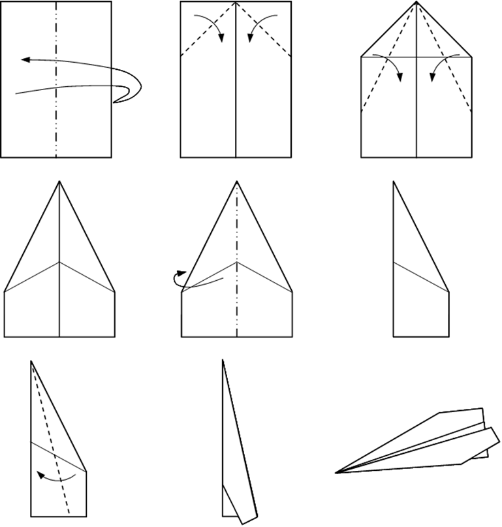
Materials: One A4 paper per child, printed instructions for folding
Task: Fold a paper airplane!
Code: The station leader will reveal the code if every child successfully folds a working airplane. (Team members may help each other but should not fold it for one another!)
Solution: 8
- Who Was Invited to the Party?
Subject Integration: Environmental Studies, Mathematics
Materials: Printed picture

Task: Count how many animals with four legs you can see in the picture! (Optionally, the group can also talk with the station leader about these animals.)
Code: The number of four-legged animals.
Solution: 7
Time filler: If one of the teams finishes earlier, they will receive a colourable illustration related to the story.
The solution:
The teams gather in the classroom. The codes must be entered into a Genially task, which they discuss together. If the code is correct, they can watch the animated video.
After that, there is a discussion about the story and the characters’ traits.
Genially: https://view.genially.com/6820a971f80d552083de1dd1/interactive-content-the-fox-and-the-stork
Evaluation of the activity:
Each group reflects on their teamwork, giving feedback, requests, and advice to one another based on the progress sheet.
Teacher’s evaluation: praise and guidance given individually and to the group as a whole.
