
1. Why Transversal Skills? Why Now?
Global educational discourse has progressively shifted from a purely knowledge-centered model to a competence-based paradigm. International frameworks (OECD, UNESCO, European Commission) highlight adaptability, collaboration, creativity, and emotional intelligence as core educational outcomes.
This shift is not ideological; it responds to structural transformations in society.
- Technological acceleration reduces the lifespan of specific technical knowledge.
- Automation transforms job markets and requires cognitive flexibility.
- Globalization increases intercultural interaction and ethical complexity.
- Environmental crises require systemic and collaborative thinking.
- Digital environments amplify emotional and relational challenges.
In such a context, education must cultivate capacities that enable transfer, adaptation, and meaning-making. Transversal skills allow knowledge to remain functional across contexts.
A child who develops critical thinking can evaluate misinformation. A child who develops resilience can persist in uncertainty. A child who develops empathy can navigate diversity constructively.
Furthermore, soft skills are the fundamental basis for working on oneself: they allow us to smooth out the rough edges of our character and cultivate those virtues that, over time, make us truly happy and satisfied, strengthening our ability to face life with balance.
2. From Content Delivery to Competence Development
Competence-based education integrates three dimensions:
- Cognitive (knowledge and intellectual processing).
- Emotional (self-regulation and awareness).
- Relational (interaction and ethical responsibility).
Transversal skills operate across disciplines. They are not separate subjects; they are developmental capacities activated within authentic learning experiences.
For example, during a mathematics problem-solving activity, students may demonstrate:
- Resilience when they encounter difficulty.
- Flexibility when they change strategy.
- Collaboration and empathy in group work.
- Critical thinking when evaluating solution validity.
This integrated perspective allows teachers to design learning experiences that simultaneously address curriculum objectives and developmental goals.
It is essential that teachers become aware of the skills involved: only then can they help their students not only to acquire knowledge, but also to practise and strengthen those transferable skills that will be valuable in everyday life. In fact, attentive teachers do not just convey content, but accompany students in training skills that will enable them to successfully face personal, professional, and social challenges, making a real difference in their growth.
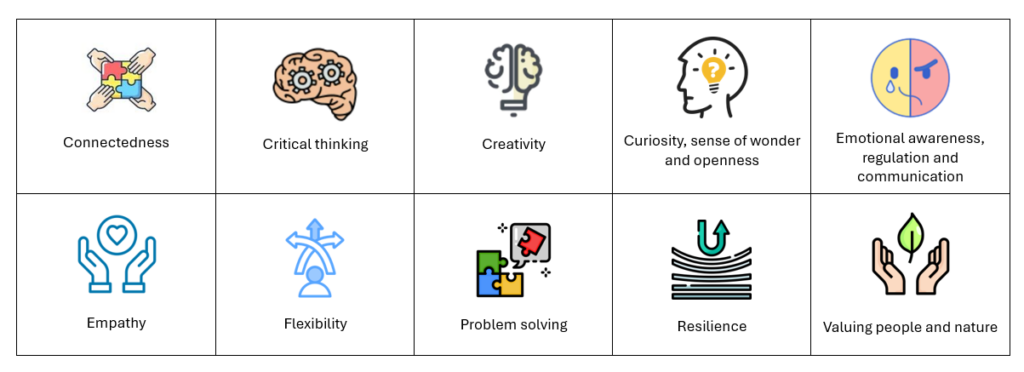
3. The Ten SPIRIT Transversal Skills – Expanded Overview
A set of skills necessary for a happy future was identified based on five in-depth interviews (one per partner) with cognitive child psychologists. These skills comprise ten basic skills that can be meaningfully understood and developed by 6- to 10-year-olds at this age.
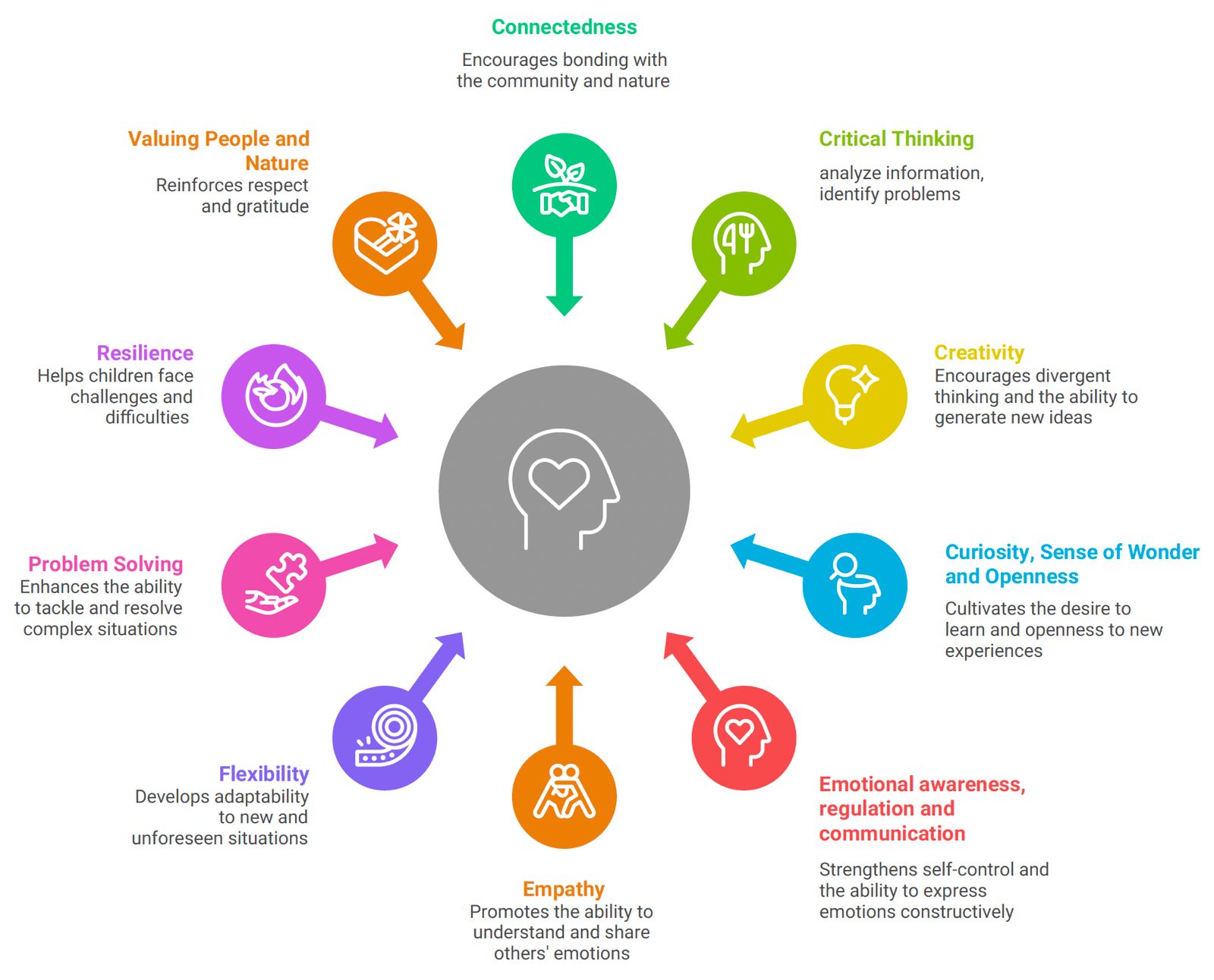
For a full explanation of the 10 SPIRIT skills, please refer to the SPIRIT website – Skills-set
4. Developmental Levels and Behavioral Indicators
Skill acquisition is progressive and observable. Recognizing levels prevents static labeling.
- Emerging – The skill appears inconsistently and requires guidance.
- Developing – The skill appears with partial autonomy.
- Consolidated – The skill is transferred independently across contexts.
For example, resilience at the emerging level may involve repeated discouragement. At the developing level, the student attempts again with encouragement. At the consolidated level, the student independently reframes mistakes.
These developmental levels are closely intertwined with cognitive, emotional, and psychological growth processes. Recent advances in neuroscience are shedding light on how students’ brains develop in relation to these skills, offering valuable insights for educators. Recognizing where a student is on this developmental spectrum enables teachers to tailor their instructional strategies and set realistic expectations, ensuring that both classroom activities and learning goals are appropriately matched to each learner’s current abilities. This awareness fosters a supportive environment that encourages progress and nurtures well-being.
5. How to develop the transversal skills- Experiential Learning and Kolb’s Cycle
Teaching transversal skills in primary schools is essential to help children develop social and emotional competencies that will serve them throughout their lives. Yet teaching transversal skills is certainly different from teaching curriculum subjects: the development of transversal skills involves an understanding of the competence itself, (observing and naming it) and the development of functional behavioural habits. To ensure an effective learning experience, teachers can structure their approach using Kolb’s Learning Cycle, which consists of four key stages:
- Concrete Experience – Students actively engage in a task.
- Reflective Observation – Students analyze their experience emotionally and cognitively.
- Abstract Conceptualization – Students identify general principles and name the skill practiced.
- Active Experimentation – Students apply learning in new contexts.
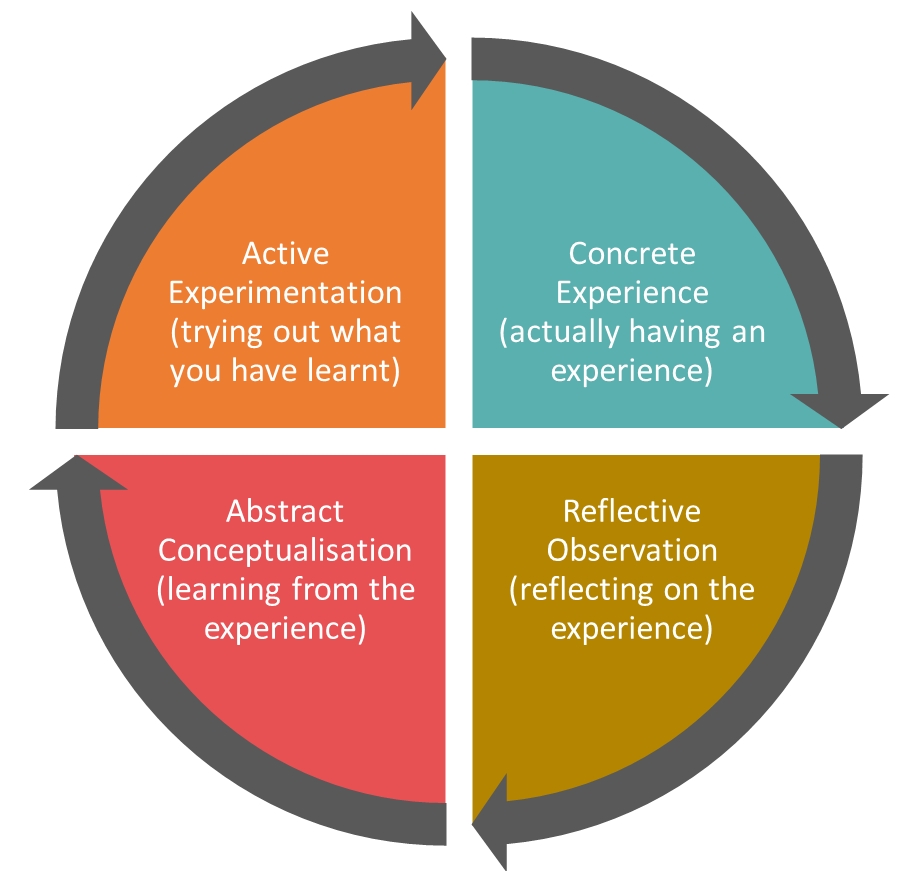
Each stage plays a crucial role in developing behavioural competencies in young learners and can be used in different periods of the learning process: anyway, we believe that, for a complete transversal skills learning experience, each stage should be used.
For example, in a STEAM design challenge, students build a prototype (experience), reflect on failure points (reflection), identify resilience strategies (conceptualization), and redesign the prototype (experimentation).
Without structured reflection, activities risk remaining superficial. With intentional facilitation, they become developmental catalysts.
For a detailed description of the model and its implications for the development of transversal skills between the ages of 6 and 10, please refer to Chapter 7 of the SPIRIT project Handbook and consider how the reading fits into your everyday teaching practice.
THE SPIRIT FRAMEWORK: COMPREHENSIVE HANDBOOK FOR TEACHERS – HOW TO TRAIN TRANSVERSAL SKILLS
6. Transversal Skills and Long-Term Well-Being
Research in developmental psychology and Positive Psychology consistently shows that well-being is not determined primarily by external success, but by internal competencies. Emotional regulation, social competence, resilience, and adaptive coping strategies strongly predict life satisfaction across the lifespan.
Within Positive Psychology, Martin Seligman’s PERMA model identifies five core dimensions of well-being: Positive Emotions, Engagement, Relationships, Meaning, and Accomplishment. Transversal skills directly support each of these dimensions.
Well-being, therefore, is not a temporary emotional state. It is a developmental capacity — the ability to manage emotions, sustain engagement, build constructive relationships, pursue meaningful goals, and respond adaptively to difficulty.
For example:
- Emotionally regulated children manage stress more effectively. They recognize emotional triggers and apply coping strategies. This supports the “Positive Emotions” dimension of PERMA, as emotional balance reduces anxiety and increases psychological stability.
- Empathetic children build supportive relationships. Empathy strengthens the “Relationships” dimension. Students who understand others’ perspectives are more likely to cooperate, resolve conflicts constructively, and feel socially connected.
- Resilient children sustain motivation through difficulty. Resilience contributes to both “Engagement” and “Accomplishment.” Students who reinterpret failure as feedback maintain effort and experience mastery over time.
- Curious children maintain intrinsic motivation. Curiosity fuels “Engagement.” When learning is experienced as exploration rather than obligation, students develop sustained cognitive involvement and deeper learning habits.
- Connected children develop meaning and civic awareness. A sense of belonging and interdependence supports the “Meaning” dimension. Students who perceive themselves as part of larger social and ecological systems are more likely to act responsibly and ethically.
These competencies interact synergistically. Emotional regulation supports resilience; empathy strengthens connectedness; curiosity enhances problem-solving. Together, they create a stable foundation for psychological well-being.
From a preventive perspective, transversal skills function as protective factors against disengagement, emotional dysregulation, and social isolation. From a promotive perspective, they foster agency, adaptability, ethical awareness, and sustainable happiness.
Therefore, transversal skills are not auxiliary to academic learning. They are foundational to long-term well-being and responsible citizenship. Within the SPIRIT framework, cultivating these competencies aligns educational success with human flourishing — preparing students not only to achieve, but to thrive.
7. The Teacher as Developmental Model
Children internalize not only explicit instruction but observed behavior. What we say matters. What we model matters even more. These are particularly relevant for children aged 6-10 years
In every classroom interaction, teachers communicate implicit messages about how to think, how to feel, how to respond to difficulty, and how to relate to others. Transversal skills are therefore not transmitted solely through structured activities or planned lessons. They are embodied daily in tone of voice, reactions to mistakes, ways of handling conflict, and attitudes toward uncertainty.
Within the SPIRIT framework, the teacher is not only a facilitator of learning experiences, but a living example of transversal competence.
Consider the following reflective questions:
- How do I respond to unexpected challenges? When a lesson does not unfold as planned, do I react with rigidity or adaptability? Do I verbalize my thinking process and model constructive problem-solving? Students observe whether difficulty is treated as a threat or as an opportunity.
- How do I communicate frustration? Do I suppress it, externalize it, or regulate it constructively? Demonstrating emotional awareness — for example, saying “I feel a bit frustrated right now, so I will take a breath and rethink this” — teaches students that emotions are manageable and communicable.
- How do I demonstrate flexibility when plans change? Flexibility is often tested in moments of disruption. By calmly adjusting strategies and explaining the reasoning behind adjustments, teachers model cognitive adaptability and emotional stability.
- How do I model curiosity in front of students? Do I ask genuine questions? Do I show interest in discovering new information? Do I express wonder when exploring a topic? When teachers demonstrate authentic curiosity, they legitimize intellectual exploration.
- How do I respond to students’ mistakes? Do I emphasize error as failure or as feedback? A growth-oriented response to mistakes reinforces resilience and reduces fear of judgment.
- How do I handle conflict between students? My mediation style becomes their relational template. Modeling empathy, perspective-taking, and calm dialogue shapes the classroom’s social climate.
Professional growth in transversal competence directly influences classroom climate. A teacher who practices emotional regulation fosters psychological safety. A teacher who demonstrates empathy cultivates trust. A teacher who models resilience normalizes effort and persistence.
This does not imply perfection. On the contrary, authenticity is essential. When teachers acknowledge their own learning processes — “I made a mistake, and I will correct it” — they demonstrate humility, responsibility, and continuous growth. Students learn that development is lifelong.
The SPIRIT approach positions the teacher at the center of the educational ecosystem. Skill development is not an additional layer added to instruction; it is embedded in daily practice. Every interaction becomes an opportunity for modeling:
- Modeling calm under pressure strengthens students’ regulation.
- Modeling reflective thinking strengthens students’ metacognition.
- Modeling openness strengthens students’ flexibility.
- Modeling respect strengthens students’ empathy.
In this sense, transversal competence is contagious. Classroom culture is shaped less by rules and more by relational patterns.
Therefore, the training process is not only about acquiring strategies to teach the ten SPIRIT skills. It is also about cultivating them personally. Teachers who reflect intentionally on their own emotional, cognitive, and relational patterns create more coherent and impactful learning environments.
Ultimately, students remember less about what was explained and more about how they felt in the learning environment. When they experience safety, respect, curiosity, and constructive challenge, they internalize those patterns as part of their own developing identity.
The teacher, within the SPIRIT framework, is both architect and participant in this developmental process — guiding, modeling, and growing alongside students.
Preparing for the Training Day
Before the workshop, we encourage you to think about what you have just read, the importance of transversal skills and how you can develop them in the age group you teach. We would like to support your effective participation in the training with some reflective questions.
- Identify concrete classroom episodes where a SPIRIT skill emerged.
- Reflect on which skills are strongest in your group.
- Consider which competencies need intentional reinforcement.
- Consider how you could make time for purposeful skill development in school days.
- Think about what behavior examples you are showing children to follow and learn in these ten transversal skills
- How children’s behaviors manifests the level or lack of these ten transversal competences.
- Select one personal developmental goal as a teacher.
Bring written reflections. The training day will transform them into shared professional dialogue.
Final Reflection
Transversal skills represent a coherent educational response to complexity. They prepare students not only for professional success but for ethical participation, emotional balance, and meaningful contribution to society.
The SPIRIT project invites you to design learning environments where knowledge and competence grow together—shaping children who think critically, act responsibly, and relate empathetically.